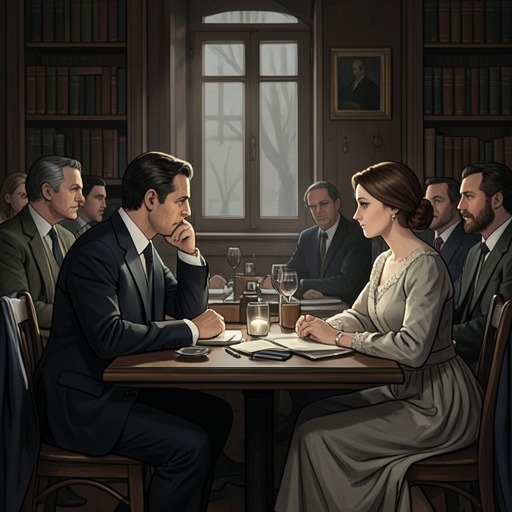
Beauty is the only master to serve
Martin Eden“Beauty is the only master to serve” is Russ Brissenden’s declaration of artistic allegiance: beauty should be pursued for its own sake, not converted into commercial success or public approval. Addressed to Martin Eden, the maxim crystallizes Brissenden’s warning that the pursuit of fame may damage the very work and sensibility it promises to reward.
The maxim and its context
Brissenden offers this counsel after Martin, impressed by Brissenden’s poetry, volunteers to help market it. Brissenden refuses the prospect of courting magazines and urges Martin to leave them alone as well. His formulation, “Love Beauty for its own sake,” makes the object of devotion beauty itself; “Beauty is the only master to serve” sharpens that advice into a rule of artistic service. The language of mastery reverses the ordinary commercial hierarchy: the writer should answer to beauty, not to publishers or the multitude.
Art against fame and money
Brissenden rejects publication, reputation, and payment as measures of artistic worth. He argues that the joy lies not in what a writer succeeds in doing but in “the doing of it,” and that beauty cannot be minted into gold. His examples are Martin’s existing work: a Stevenson sonnet, the “Love-cycle,” and sea-poems. Brissenden regards these as successes already, regardless of whether magazines recognize them, and contrasts their value with the inability of magazine reading to reveal the worth of a line by Keats. The maxim therefore opposes the intrinsic experience of making art to the external rewards of the literary marketplace.
Martin’s contrasting principle
Martin does not simply accept Brissenden’s separation of beauty from other ends. He says that he seeks love rather than fame, and that in his own understanding “Beauty is the handmaiden of Love.” The exchange leaves the two men in partial agreement about the importance of beauty but divided over what it serves: Brissenden treats beauty as the ultimate master, while Martin places it in relation to love. Brissenden’s warning that Martin’s “Love-cycle” arose from a romantic attachment further exposes that difference. The expression thus names a clear aesthetic ideal while the conversation tests its limits against Martin’s own emotional and artistic commitments.